Noita: Every Pixel Is Part of the System
What this page helps you decide: whether systemic experimentation matters more than broad platform support or conventional weapon handling.
Noita's official description makes one unusually strong technical promise: every pixel in its world is physically simulated, and player-created spells interact with that world. Steam lists 88,556 reviews at 95.1% positive, a $19.99 price, 11 interface languages and windows support. Its price and review evidence sit in the middle of this batch, while its Windows-only listing is narrower than several similarly priced roguelikes. Those are useful buying filters, but they do not prove difficulty, run length or long-term variety. This page therefore uses the published figures for the comparison and keeps the rest as a clearly labelled reading of the official description.
Simulation is the differentiator
Many roguelikes promise generated layouts; Noita instead foregrounds material behavior. The repeated decision is not just which route to take but how spells and substances transform the space around the player. That distinction matters because a genre label can hide the action the player repeats most often. A useful decision page should identify that repeated action without converting marketing copy into an invented statistic. Here the recommendation stays tied to what the developer actually says the player does, then uses price and review evidence only as context.
Middle price, distinctive risk profile
Its score and review count are close to Enter the Gungeon, yet the official pitches point to very different skills. Noita emphasizes experimentation with systems, while Gungeon emphasizes shooting and dodging. The review percentage and review count need to be read together: the percentage describes the share of positive Steam reviews, while the count shows the size of that recorded audience. Neither number measures whether the particular combat rhythm, control demand or progression loop suits you. For this roguelike comparison, they are confidence signals rather than a substitute for the format decision.
What the official listing establishes
The listing names Action, Adventure, Indie, RPG and Simulation genres and describes a procedurally generated world. Windows, Workshop and partial controller support are published; experiment counts and world dimensions are not. The attributable facts are developer, release date, current listed price, Steam review total and percentage, interface-language count and supported desktop platforms. The source block below links the official listing and records when it was read. It does not establish average session length, number of bosses, number of viable builds, difficulty rank or completion time. Leaving those fields blank is intentional: an absent official figure should not quietly become a community estimate presented as fact.
Why outside instruction may change discovery
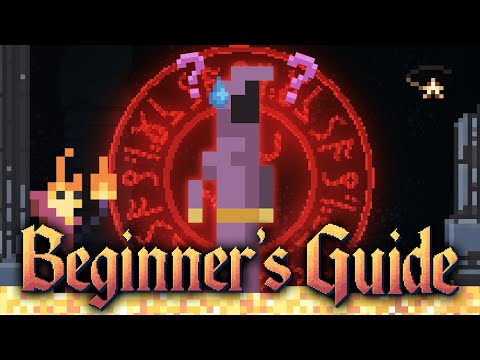
A sizable guide ecosystem can explain spell interactions that the physical simulation makes hard to predict. That help also risks replacing experimentation with recipes, so the useful amount of guidance depends on why you are buying the game. The video count shown in the fact panel is a dated YouTube search-result signal, not a quality score and not a promise that every result is useful. Its practical value is comparative: it indicates whether a buyer is entering a heavily documented game or one with a smaller visible help ecosystem. The linked example is attributed to its channel and the thumbnail is self-hosted by this site rather than hotlinked or embedded.
Step-by-Step
- Choose it for interactions—melting, burning, freezing and evaporating—not because a generic roguelike label sounds familiar.
- Treat spell creation as the stated build system, while leaving total spell counts and viable combinations unstated unless an official source publishes them.
- Check the platform line before buying: the official listing records windows, not an assumption based on another release.
- Use the dated review and price figures as a snapshot. They were read on 2026-08-28 and can move after that date.
- Open the named guide-video source if you want to judge the available help before committing to this roguelike.
Tips & Notes
- The Steam categories list Workshop support and partial, not full, controller support.
- A physically simulated world can produce complex outcomes, but the listing does not quantify difficulty or unpredictability.
- The store publishes no completion-time or run-count promise, so neither is used to make the recommendation.
FAQ
What does Noita mean by every pixel being simulated?
That wording comes from the official store description, which pairs it with melting, burning, freezing and evaporating through the world. This page quotes the proposition without inventing a technical specification for the simulation.
What verified figures does Viddura use for Noita?
The official Steam snapshot supplies $19.99, 88,556 reviews at 95.1% positive, 11 interface languages, windows and the release date. The source and read date appear below.
Does Noita have official Chinese support on Steam?
Yes. The official Steam row lists Chinese among 11 interface languages.
How long does Noita take to finish?
The official store row used here does not publish a completion time, so Viddura does not state one. Player-history estimates answer a different question and are not mixed into this official-data comparison.
Sources
- Official Noita on Steam (official store page) — Source for the developer, Steam release date, price, review counts, review percentage, language list and platform list quoted on this page. Read 2026-08-28.
- Community "The Ultimate Noita New Player's Guide" by FuryForged — Guide video referenced for Noita; search "Noita guide" returned about 197,533 results. Read 2026-08-28.